For facilities managers and property professionals, outdoor spaces are often one of the first things visitors, employees, and tenants notice. Yet proactive grounds maintenance is still frequently approached reactively.
Delaying maintenance may appear to reduce short-term costs, but the long-term financial and consequences can be significant. Damaged hard surfaces, overgrown vegetation, drain failures, slip hazards, and site appearance all contribute to rising costs, increased liability, and avoidable disruption.
A proactive grounds maintenance strategy helps protect assets, improve safety, reduce call outs, and support long-term cost control. Rather than constantly responding to problems, facilities managers can prevent many issues before they get worse.
Reactive Maintenance Often Costs More
One of the biggest myths in facilities management is that putting off maintenance saves money. In reality, reactive maintenance is typically more expensive than planned maintenance over time.
Small defects quickly become larger issues when left. Cracked paths develop into trip hazards. Blocked drains lead to floods. Unmanaged flora can damage fencing, signage, and building exteriors. Moss and algae increase slip risks.
The cost difference between preventative upkeep and emergency repair work can be substantial. Planned grounds maintenance allows businesses to manage issues early, reducing the likelihood of expensive remediation works later.

Protecting Outdoor Assets and Infrastructure
Commercial estates contain a wide range of outdoor assets that are exposed to constant wear from weather, traffic, and seasonal conditions.
These include:
- Car parks
- Pathways
- Drainage systems
- Fencing and access points
- Soft landscaping and green spaces
- Line marking and hard surfaces
- Trees
Without a structured maintenance strategy, these assets deteriorate faster and require more frequent repair or replacement.
Planned grounds maintenance helps preserve the condition and functionality of outdoor infrastructure through regular inspections, scheduled maintenance, and early intervention. This approach supports better budget forecasting and reduces unexpected capital expenditure.
OUTCO’s grounds maintenance services focus on preserving attractive and functional outdoor environments while reducing long-term costs through preventative measures.
Health and Safety Risks Cannot Be Ignored
Facilities managers face increasing pressure to maintain safe, compliant environments across their sites. Neglected grounds create avoidable health and safety risks that can expose organisations to claims, reputational damage, and operational disruption.
Common risks include:
- Uneven paving and potholes
- Slippery surfaces caused by moss or algae
- Overgrown vegetation obstructing walkways
- Poor visibility from unmanaged trees and shrubs
- Flooding from blocked drains
- Ice accumulation during winter months
A proactive maintenance programme helps identify hazards early and ensures outdoor environments remain safe throughout the year.
Planned Maintenance Improves Budget Control
Unexpected reactive works are difficult to budget for and can quickly consume maintenance spend.
Proactive grounds maintenance provides greater financial predictability by replacing emergency repairs with scheduled maintenance activity. Facilities managers can spread costs more effectively across the year and prioritise maintenance based on asset condition and operational risk.
Many facilities professionals are now prioritising long-term asset protection and preventative maintenance strategies to reduce operational disruption and improve cost efficiency. OUTCO’s buyer persona research found that facilities managers increasingly focus on minimising unexpected expenses and preventing problems before they occur.

Site Appearance Directly Impacts Perception
Grounds maintenance is not only about functionality and compliance. It also shapes how businesses are perceived.
Poorly maintained outdoor environments can negatively affect customer confidence, employee experience, tenant satisfaction, and brand reputation.
Overgrown green spaces, litter build up, damaged surfaces, and forgotten entrances create an impression of poor management and lack of attention to detail.
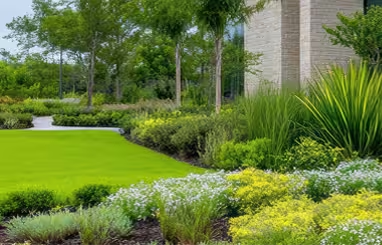
By contrast, professionally maintained outdoor spaces create a safer, cleaner, and more welcoming environment for visitors and occupants.
Proactive Grounds Maintenance Supports Long-Term Sustainability
Sustainability is becoming a growing priority for facilities and property managers. A reactive approach to maintenance often leads to unnecessary waste, repeated repairs, and inefficient resource use.
Proactive grounds maintenance supports sustainability objectives by:
- Extending asset lifespan
- Reducing material waste
- Minimising emergency repair works
- Supporting biodiversity initiatives
- Improving drainage and environmental performance
- Reducing unnecessary site visits
OUTCO’s environmental management services support Biodiversity Net Gain (BNG), invasive weed control, and sustainable outdoor estate management practices.
For organisations with ESG targets, planned grounds maintenance can contribute to both operational efficiency and environmental responsibility.

The Long-Term Value of a Proactive Approach
For facilities managers, the question is no longer whether grounds maintenance is necessary, but whether a reactive approach is financially sustainable.
Neglecting outdoor maintenance creates avoidable risks, accelerates asset deterioration, increases operational disruption, and ultimately costs more over time.
Proactive grounds maintenance delivers measurable long-term value by:
- Reducing reactive repair costs
- Extending asset lifespan
- Improving health and safety compliance
- Supporting operational continuity
- Enhancing site presentation
- Providing greater budget control
- Supporting sustainability goals
A planned maintenance strategy helps facilities managers move from short-term problem solving to long-term asset protection.
In increasingly competitive and compliance focused environments, that shift can make a significant difference to performance and overall cost efficiency.