
Autumn brings a new set of challenges for commercial properties. Falling leaves, heavy rainfall and stronger winds can create safety hazards, block drainage systems and damage trees. Without a clear plan, these issues can quickly disrupt daily operations. A proactive grounds maintenance strategy helps facilities and property managers stay ahead of seasonal risks, protect outdoor spaces and reduce unexpected repair costs.
Rather than treating leaf clearance, tree inspections and drainage as separate tasks, businesses benefit from a coordinated approach that addresses how these risks connect.
Why Autumn Needs an Integrated Grounds Maintenance Plan
Autumn weather can change site conditions quickly. A clear pathway in the morning may become slippery by the afternoon, while heavy rain can turn a blocked drain into a localised flood.
These problems often share a common cause. Leaves accumulate on footpaths, collect around drainage gullies and restrict water flow. At the same time, strong winds can damage weakened branches, creating further hazards for people, vehicles and buildings.
A coordinated grounds maintenance plan helps property managers tackle these issues together rather than responding to each problem individually.
An effective autumn maintenance programme should focus on three connected priorities:
- Keeping access routes clear: Removing fallen leaves and debris from footpaths, entrances and car parks to reduce slip and trip hazards.
- Managing tree safety: Identifying damaged, diseased or unstable trees before autumn storms increase the risk of falling branches.
- Maintaining drainage: Clearing gullies and checking water flow to reduce standing water, flooding and damage to outdoor surfaces.
By bringing these activities together, facilities managers can prioritise high-risk areas, plan resources more effectively and avoidunnecessary site visits.
Leaf Clearance: Reducing Slip Risks and Keeping Sites Accessible
Fallen leaves are a natural part of autumn, but they can create problems for commercial properties.
When leaves become wet, they form slippery layers on hard surfaces. They can also hide uneven paving, potholes and other hazards that pedestrians might otherwise notice.
Busy entrances, pedestrian routes, car parks and loading areas face particular risks, especially during periods of heavy leaf fall.
Regular leaf clearance forms an important part of seasonal grounds maintenance, helping businesses maintain safe access for employees, visitors and customers.
Where should leaf clearance take priority?
Facilities managers should focus on areas where leaf build-up creates the greatest risk, including:
- Main entrances and pedestrian walkways
- Car parks, loading bays and delivery routes
- Steps, ramps and access points
- Areas beneath mature trees
- Drainage channels and gullies
The frequency of clearance should reflect each site’s layout, tree coverage and level of foot traffic.
For example, a retail park surrounded by mature trees may require more frequent visits than an industrial estate with limited vegetation.
The goal is to prevent leaf build-up from affecting safety, accessibility and daily operations.
A planned outdoor maintenance schedule also helps teams spot related issues, such as blocked gullies or damaged paving, before they become more serious.

Tree Inspections: Identifying Risks Before Autumn Storms
Autumn storms place additional pressure on trees, particularly those with damaged branches, decay or existing structural weaknesses.
Strong winds and saturated ground can increase the likelihood of branches falling or trees becoming unstable.
For commercial properties, these risks extend beyond the trees themselves. Falling branches can damage parked vehicles, obstruct access routes, affect buildings and put pedestrians at risk.
Professional tree inspections help facilities managers understand the condition of their tree stock and identify where maintenance may be necessary.
What should autumn tree inspections cover?
A tree risk assessment should consider:
- Dead, damaged or hanging branches
- Signs of disease or decay
- Cracks or weaknesses in trunks and major branches
- Root damage or changes in ground conditions
- Trees close to buildings, roads, footpaths and parking areas
Qualified tree specialists can assess these risks and recommend appropriate action, from pruning and ongoing monitoring to removing trees that present an unacceptable danger.
OUTCO’s arboricultural services include tree surveys, tree surgery and planned tree care. Our specialists provide reports that identify potential hazards and recommend practical next steps.
By incorporating tree inspections into a wider grounds maintenance programme, businesses can coordinate essential work before severe weather creates additional challenges.
This approach also helps property managers plan expenditure, prioritise urgent work and maintain records of the steps they have taken to manage tree safety.

Drainage Maintenance: Keeping Water Flowing During Heavy Rainfall
Autumn rainfall can expose weaknesses in a property’s drainage system.
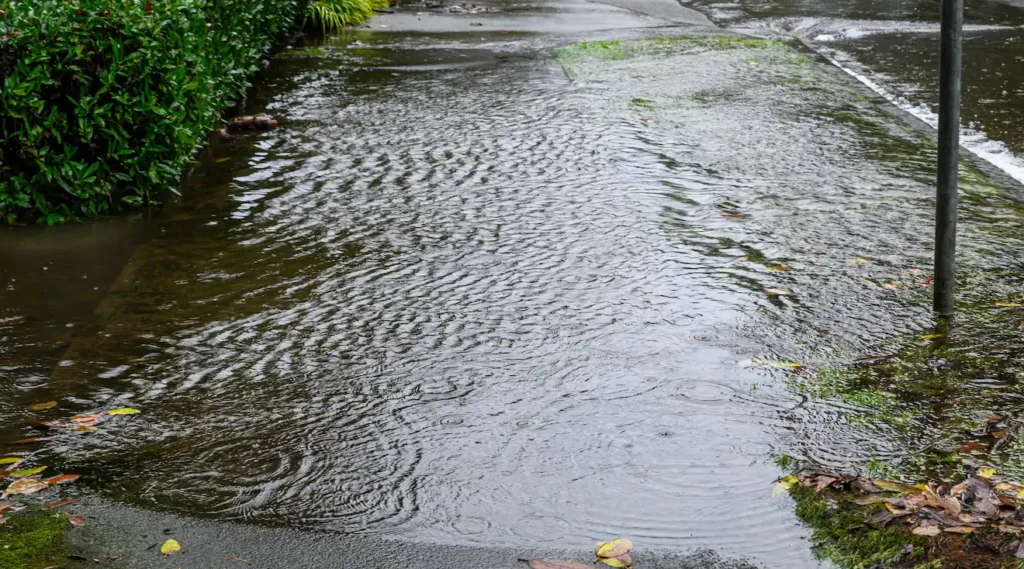
Leaves, silt and other debris often collect around gullies and drainage channels. When these materials restrict water flow, rainwater can accumulate on roads, pathways and car parks.
Standing water creates several problems. It can make pedestrian routes difficult to use, interrupt vehicle movements and contribute to surface deterioration.
As temperatures fall towards winter, standing water can also freeze, introducing another slip hazard.
This makes drainage care an essential part of autumn estate maintenance.
How can businesses reduce drainage risks?
A practical drainage plan should include:
- Gully clearance: Remove leaves, litter and surface debris before they restrict water flow.
- Drainage inspections: Check areas with a history of standing water or repeated blockages.
- Surface checks: Look for damaged paving, uneven ground and areas where water collects.
- Targeted maintenance: Arrange further investigation or repairs when routine clearance does not resolve the problem.
Leaf clearance and drainage maintenance work together. Clearing a gully offers limited long-term value if nearby leaves continue to wash into it.
Coordinating both activities helps reduce repeat visits and supports more effective use of maintenance budgets.
OUTCO supports commercial properties through drain maintenance, drain surveys and specialist cleaning services, including road sweeping.
By combining these services with planned grounds maintenance, clients can address surface debris, drainage problems and wider site conditions through a more joined-up approach.
Service Frequencies: Matching Maintenance to Site Conditions
Not every commercial property needs the same autumn maintenance schedule.
A busy healthcare facility with tree-lined pedestrian routes will face different risks from a distribution centre with large open car parks.
Applying the same service frequency across every location can lead to unnecessary visits at some sites while leaving others exposed to avoidable risks.
A more effective approach considers how each property operates and how seasonal conditions affect it.
What determines the right maintenance frequency?
Facilities managers should consider four factors.
1. Tree coverage and leaf fall
Sites with mature trees or dense vegetation may need more frequent leaf clearance, particularly during peak leaf fall.
2. Footfall and vehicle movements
Busy entrances, public walkways and loading areas may require closer attention because debris and standing water can affect more people.
3. Drainage conditions
Properties with known drainage problems, low-lying areas or repeated surface flooding may need additional inspections and clearance.
4. Weather conditions
Periods of strong winds or heavy rainfall may justify extra checks, even when routine maintenance visits remain on schedule.
A flexible grounds maintenance plan combines scheduled visits with the ability to respond when conditions change.
For example, a property manager might arrange regular leaf clearance throughout autumn, with additional inspections after a major storm.
This helps focus resources where they provide the greatest value rather than relying on a fixed schedule that cannot respond to changing site risks.
Escalation: Knowing When Routine Maintenance Is Not Enough
Routine maintenance helps prevent many seasonal problems, but some issues require a faster or more specialist response.
A fallen branch blocking a main entrance, a damaged tree overlooking a car park or a flooded access road may need immediate attention.
Facilities managers should establish clear escalation procedures before these situations arise.
An effective process should identify:
- What requires urgent action: Hazards that present an immediate risk to people, property or essential access.
- Who receives the report: A named contact or support team responsible for arranging the next steps.
- How teams manage the risk: Appropriate temporary measures, such as restricting access to an unsafe area.
- When specialists need to attend: Clear priorities for tree work, drainage repairs or additional clearance.
- How teams record the outcome: Evidence of the issue, the response and the completed work.
These steps help businesses respond consistently and maintain a clear record of their maintenance decisions.
For multi-site property managers, effective escalation also reduces the time spent chasing contractors, checking job progress and gathering service information.
How OUTCO Makes Autumn Grounds Maintenance Easier
Managing autumn risks across a commercial estate takes more than a series of individual maintenance visits.
Facilities managers need reliable delivery, specialist expertise and clear information about the work taking place across their sites.
OUTCO brings together planned grounds care, arboricultural services and reactive outdoor maintenance to help clients manage these responsibilities more efficiently.
With over 20 years of outdoor maintenance experience and nationwide coverage, OUTCO supports businesses across retail, healthcare, logistics, education and other commercial sectors.
Our approach focuses on four practical outcomes.
1. Fewer contractors to manage
OUTCO offers a broad range of outdoor maintenance services, including vegetation clearance, tree surveys, tree surgery, drainage maintenance and specialist cleaning.
This allows clients to coordinate related work through one service provider rather than managing separate contractors for every outdoor issue.
2. Support across single and multi-site estates
OUTCO manages approximately 11,000 sites nationwide, combining national service coverage with local operational knowledge.
This scale helps property managers maintain consistent service arrangements across geographically spread estates while accounting for individual site requirements.
3. Clear service records and visibility
The OUTCO Service Portal gives clients access to planned and completed service activity, job progress and downloadable reports.
Photographic evidence and GPS-backed service records help facilities managers check completed work without needing to visit every location themselves.
4. Planned maintenance backed by specialist support
Routine grounds care helps control everyday risks, while specialist surveys and reactive services provide additional support when site conditions require attention.
This combination helps businesses identify problems earlier, prioritise essential work and reduce the disruption that unexpected outdoor maintenance issues can cause.
Prepare Your Grounds for Autumn and the Winter Ahead
Autumn grounds maintenance should form part of a wider seasonal risk plan, not a collection of unrelated tasks.
Leaf clearance helps keep access routes safe. Tree inspections identify hazards before storms. Drainage maintenance helps water flow away from roads, pathways and car parks.
When businesses coordinate these activities, they gain a clearer understanding of their outdoor risks and can take action before small issues develop into larger problems.
Early planning also supports the transition into winter, when falling temperatures can turn standing water into ice and make safe access even more important.
For facilities and property managers, the benefits are practical: fewer avoidable disruptions, clearer maintenance priorities, better control over costs and less time spent managing contractors.
OUTCO helps businesses protect, maintain and improve their outdoor estates through planned maintenance, specialist services and clear service reporting.
Whether you manage one commercial property or a nationwide portfolio, our team can help you build an autumn maintenance plan around your site’s needs.