A commercial grounds maintenance contract should do far more than list the services you’ll receive. It should clearly define how performance will be measured, how quality will be monitored, and what happens when standards are not met. Without measurable expectations, even the most comprehensive specification can lead to inconsistent service, unnecessary disputes and increased management time.
For facilities managers, property managers and procurement professionals responsible for multiple sites, the contract should become a framework that delivers consistency, accountability and visibility. The most successful commercial grounds maintenance partnerships are built on agreed performance standards, supported by transparent reporting and evidence-based service delivery.
Below are seven performance standards every commercial grounds maintenance contract should include.
1. Define Site Standards and Frequencies
Every site has different operational requirements. A retail park, distribution centre, office campus and healthcare estate all require different maintenance frequencies and presentation standards.
Rather than simply listing tasks, define measurable outcomes for every service area.
For example:
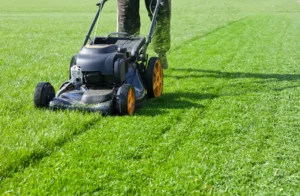
- Grass maintained between agreed height tolerances
- Hedges trimmed to maintain safe visibility and neat presentation
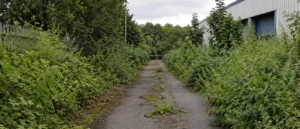
- Paths, entrances and car parks kept free from weeds and debris
- Litter removed to agreed cleanliness standards
- Seasonal beds maintained to specified quality levels
Service frequencies should also be clearly documented, including weekly, monthly, seasonal, or reactive visits. This removes ambiguity and creates consistent expectations across your entire estate.

2. Set Seasonal Service Requirements
Grounds never remain static throughout the year.
Your commercial grounds maintenance specification should define how service changes with the seasons rather than relying on generic maintenance schedules.
Typical seasonal requirements include:
Spring
- First grass cuts
- Weed treatment programmes
- Shrub pruning
- Seasonal planting
Summer
- Increased mowing frequencies
- Irrigation where required
- Vegetation control
- Litter management during peak occupancy
Autumn
- Leaf clearance
- Drain and gully maintenance
- Winter preparation
- Tree inspections
Winter
- Vegetation management
- Storm damage inspections
- Site safety inspections
- Planning for spring works
Planning seasonal requirements in advance allows resources to be allocated efficiently while reducing reactive costs.

3. Agree Inspection and Evidence Rules
One of the biggest causes of contract disputes is differing opinions on whether work has actually been completed.
Modern grounds maintenance services should provide objective evidence rather than relying solely on manual sign-off.
Agree how work will be inspected and evidenced, including photographic completion records, GPS verification, time-stamped service reports, etc.
Technology-enabled reporting gives facilities teams greater visibility across multiple sites while reducing administration. Digital service portals can also provide downloadable service reports, photographic evidence and GPS tracking to support contract compliance and simplify audits.
4. Measure Response and Rectification Times
Not every issue can wait until the next scheduled visit.
Your contract should define response times for reactive issues as well as how quickly defects must be rectified.
Examples include:
| Issue | Target Response |
| Safety hazard | Within agreed emergency SLA |
| Fallen tree or obstruction | Same day where required |
| Missed scheduled visit | Rectified within agreed timeframe |
| Customer complaint | Acknowledged within agreed SLA |
| Quality issue | Corrective action within agreed timeframe |
Clearly defined response targets improve accountability and help maintain safe, compliant outdoor environments.
5. Control Variations and Extras
Contract variations often become a source of frustration when responsibilities are unclear.
A well-written commercial landscape maintenance contract should define:
- What is included within the agreed price
- What qualifies as additional work
- Approval processes
- Quotation timescales
- Emergency authorisation procedures
This prevents unexpected invoices while giving both parties clarity over additional works.
Where clients operate across multiple sites, standard variation procedures also improve procurement governance.
6. Review Sustainability and Biodiversity
Environmental performance is becoming an increasingly important part of facilities management.
Rather than treating sustainability as a separate initiative, include measurable environmental objectives within your commercial grounds maintenance contract.
Examples include:
- Biodiversity improvement programmes
- Native planting schemes
- Wildflower areas
- Invasive species control
- Biodiversity Net Gain (BNG) initiatives where appropriate
Forward-thinking maintenance providers increasingly integrate biodiversity consultancy, invasive weed management and habitat enhancement into wider estate management programmes to support both environmental goals and regulatory requirements.

7. Reporting
Before the service begins, agree a mobilisation plan covering site data, asset schedules, access arrangements, baseline inspections, reporting setup and local communication.
Agree a reporting framework before mobilisation begins.
This should include:
Monthly reporting: Such as completed visits, missed visits, SLA Performance and any outstanding actions.
Quarterly reviews: Contract performance, budget tracking, seasonal planning, sustainability goals.
Annual reviews: Site reviews, improvement opportunities, site changes, long-term plans.
For larger estates, digital reporting platforms can significantly improve visibility by allowing facilities teams to monitor live service activity, access photographic evidence, track service history and request additional works through a single portal.
Request a Commercial Grounds Maintenance Contract Review
If you’re reviewing an existing contract or preparing to tender a new one, it’s worth assessing whether your specification measures performance as well as it defines services.
Request a commercial grounds maintenance contract review to identify opportunities to strengthen governance, improve consistency and ensure your contract delivers the standards your sites require.