For facilities managers, property managers and estate owners, Surface Repairs in Summer offer one of the most effective ways to reduce maintenance costs, improve safety and extend the lifespan of outdoor assets. Warmer temperatures, longer daylight hours and drier conditions create the ideal environment for carrying out repairs before minor defects develop into major liabilities.
Whether managing car parks, access roads, service yards or pedestrian walkways, addressing defects early can significantly reduce long-term expenditure whilst helping organisations maintain safe and compliant environments.
Why Summer is the Best Time for Surface Repairs
Surface defects rarely improve on their own. Small cracks allow water to penetrate beneath the surface, weakening the sub-base and accelerating deterioration. During autumn and winter, repeated freeze-thaw cycles can rapidly expand existing damage, transforming minor issues into costly repairs.
Summer provides the optimal conditions for repair work because:
- Dry weather improves repair quality and durability
- Asphalt and repair materials bond more effectively at higher temperatures
- Longer daylight hours reduce project duration
- Lower rainfall minimises disruption and delays
- Repairs can be completed before winter weather accelerates deterioration
By scheduling Surface Repairs in Summer, organisations can address issues proactively rather than responding to emergency failures later in the year.
The Cost of Delaying Repairs
One of the biggest misconceptions in property maintenance is that postponing repairs saves money. In reality, delayed intervention often increases overall costs significantly.
For example:
| Defect | Typical Early Repair | Potential Consequence if Ignored |
|---|---|---|
| Small crack | Crack sealing | Structural failure and resurfacing |
| Minor pothole | Localised patch repair | Large pothole requiring reconstruction |
| Surface depression | Targeted repair | Drainage failure and extensive deterioration |
| Worn line markings | Repainting | Safety and compliance concerns |
Addressing defects while they remain small often costs a fraction of full reconstruction works.
How Pothole Repairs Protect Your Budget
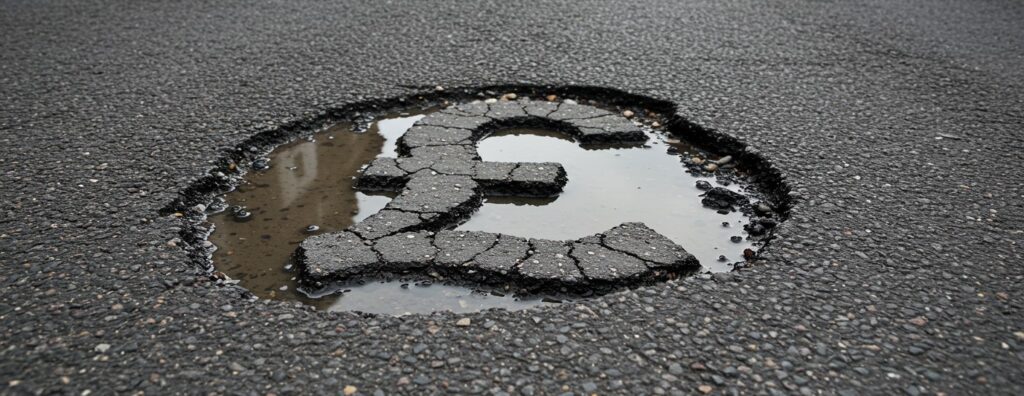
Pothole repairs are among the most common forms of hard surface maintenance across commercial estates.
Potholes develop when water penetrates the surface and weakens the underlying structure. As vehicles repeatedly pass over the affected area, the surface begins to break apart.
Beyond the repair cost itself, potholes can lead to:
- Vehicle damage claims
- Personal injury claims
- Operational disruption
- Negative visitor impressions
- Increased future maintenance costs
According to the Health and Safety Executive (HSE), slips, trips and falls remain one of the leading causes of workplace injuries in the UK. Uneven surfaces and potholes can contribute significantly to these risks.
Prompt repairs help reduce liability exposure while maintaining safe access for employees, visitors and contractors.
Hard Surface Maintenance Extends Asset Life
Car parks, access roads and pedestrian routes represent significant capital investments. Like any asset, their lifespan depends heavily on ongoing maintenance.
Effective hard surface maintenance focuses on preserving existing infrastructure rather than waiting for complete failure.
Typical maintenance activities include:
- Surface repairs
- Crack sealing
- Drainage maintenance
- Line marking
- Surface cleaning
- Preventative inspections
Research across infrastructure sectors consistently demonstrates that preventative maintenance programmes can significantly extend asset life compared with reactive repair approaches.
OUTCO’s reactive works services are designed to maintain and extend the lifespan of outdoor assets through proactive intervention and planned maintenance strategies.

The Role of Asset Lifecycle Management
Forward-thinking organisations increasingly adopt an asset lifecycle management approach to outdoor infrastructure.
Rather than viewing repairs as isolated costs, lifecycle management considers the total cost of ownership throughout an asset’s lifespan.
The objective is simple:
- Maximise service life
- Reduce emergency repairs
- Improve budget predictability
- Minimise operational disruption
A well-maintained surface can often remain operational for years longer than one that receives only reactive attention.
OUTCO’s reactive works approach focuses on extending asset life through regular maintenance, helping clients balance operational expenditure with long-term capital investment.
Why Preventative Maintenance Delivers Better Value
The most cost-effective maintenance strategy is almost always preventative maintenance.
Regular inspections allow defects to be identified before they escalate, enabling organisations to prioritise repairs based on risk, condition and budget.
Benefits include:
- Lower overall maintenance costs
- Reduced risk of accidents
- Improved site appearance
- Better budget planning
- Longer asset lifespan
- Fewer emergency call-outs
Preventative maintenance programmes can reduce repair expenditure significantly compared with purely reactive approaches, making them a valuable component of any estate management strategy.
Reducing Risk Through Early Intervention
Beyond financial savings, Surface Repairs in Summer play a critical role in risk management.
Damaged surfaces can create hazards for:
- Pedestrians
- Cyclists
- Service vehicles
- Delivery drivers
- Customers and visitors
For facilities and property managers, maintaining safe access routes is an important part of meeting duty-of-care obligations and supporting compliance with health and safety requirements.
By identifying and repairing defects during summer, organisations can enter the autumn and winter months with greater confidence that their sites remain safe, accessible and operational.
Plan Surface Repairs Before Winter Arrives
The longer surface defects remain untreated, the more likely they are to deteriorate and require expensive remediation.
Surface Repairs in Summer provide an opportunity to protect budgets, improve safety and maximise the lifespan of valuable outdoor assets. By adopting a proactive maintenance strategy, facilities managers can reduce long-term costs, minimise operational disruption and create safer environments for everyone who uses their sites.
Investing in early intervention today is often far more cost-effective than funding major reconstruction projects tomorrow.