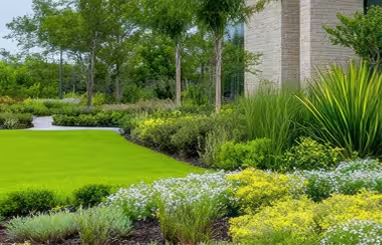
Outdoor spaces are often viewed as peripheral assets. They sit outside the core operation, beyond the building, and as a result are frequently deprioritised when budgets tighten.
Yet neglected external environments carry costs that extend far beyond over-grown grass or faded line markings. For organisations operating in retail, healthcare, logistics or commercial property, the financial and reputational implications are significant. The true cost of neglect is rarely immediate, but it adds up over time.
Financial Impact: The Numbers Behind Neglect
Reducing grounds maintenance frequency or delaying minor repairs may appear to generate short-term savings. However, industry data shows that the costs can be substantial.
1. Slips, Trips and Falls
According to the UK Health and Safety Executive (HSE), slips and trips account for approximately 32% of all non-fatal workplace injuries each year.
The average compensation payout for a public liability claim involving a slip or trip can range from £10,000 to £20,000, with more serious cases significantly higher once legal and administrative costs are factored in.
Many of these incidents come from neglected outdoor spaces; uneven paving, moss build-up, potholes or poorly managed winter conditions. A single claim can outweigh the annual cost of routine external inspections.
2. Winter Disruption Costs
Research indicates that UK businesses lose over £1 billion annually due to snow and ice-related disruption, including lost productivity and operational downtime. Additionally, around 21 million workdays are lost each year because of snow and ice conditions affecting access and travel.
For retail operators, limited access can directly reduce footfall. For logistics and healthcare environments, it can compromise essential operations. The cost of preventative winter planning is predictable. The cost of disruption is not.
3. Escalating Repair Costs
Industry studies on preventative maintenance consistently show that reactive repairs on neglected outdoor spaces can cost up to three to five times more than planned maintenance interventions.
For example:
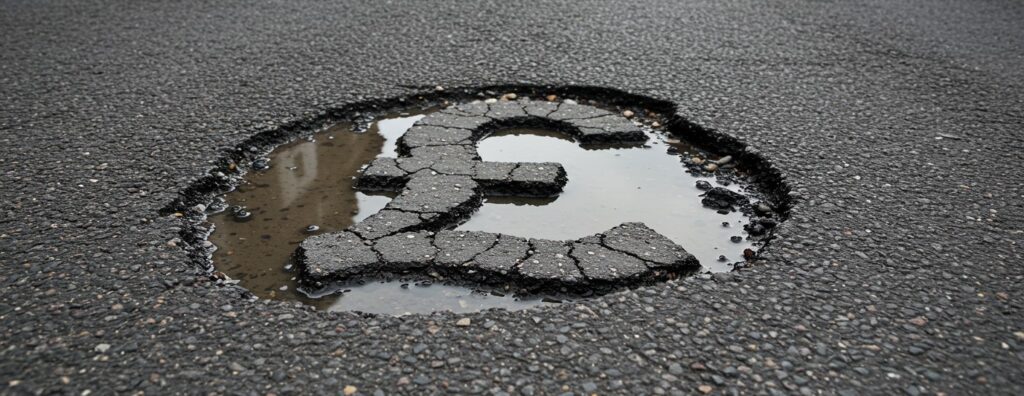
- A small pothole repair picked up early may cost hundreds.
- Ignored, full resurfacing of a car park section can cost tens of thousands.
4. Drainage and Flooding Impact
The Association of British Insurers reports that weather related property damage claims regularly exceed hundreds of millions of pounds annually, with surface water flooding a recurring cause.
Blocked drains and unmanaged external infrastructure significantly increase flood risks.
Flood damage does not only impact surfaces, it disrupts operations, damages stock and weakens infrastructure.
_________________________________________________________________________________
Reputational Impact: The Cost You Cannot Invoice
Financial impact is only part of the equation. Reputational damage, while harder to measure, can be long lasting.
1. First Impressions Influence Behaviour
Multiple retail studies confirm that environmental quality affects customer perception and dwell time. Poor external presentation reduces perceived brand quality and trust.
Customers often associate outdoor neglect with internal standards, fairly or unfairly.
2. Social Amplification
In today’s environment, external estate issues are visible. A flooded car park, fallen tree or unsafe walkway can be photographed and shared instantly.
What was once a localised maintenance issue can quickly become public commentary on organisational standards. What’s more, reputational repair often costs far more than physical repair.

3. Insurance Premium Implications
Insurers increasingly scrutinise maintenance records when underwriting commercial properties. Poor claims history linked to preventable outdoor incidents can contribute to higher premiums and stricter terms.
Neglect has long-term financial implications beyond the immediate repair.
The Effect of Delays
l
One of the most underestimated aspects of neglect is the compounding nature of risk:
- Vegetation encroachment leads to structural damage.
- Minor cracks become trip hazards.
- Tree health issues become emergency removals after storms.
- Surface wear accelerates asset replacement cycles.
Each delay narrows the range of cost-effective solutions available. Preventative investment stabilises budgets. Reactive crisis management introduces volatility
Outdoor Spaces as Strategic Assets
Well-managed external environments deliver measurable returns:
- Reduced injury claims
- Lower reactive repair costs
- Extended asset lifespan
- Protected footfall and revenue
- Strengthened brand perception
- Improved compliance defensibility
Neglected outdoor spaces, by contrast, erode value quietly until the impact becomes unavoidable.
The Real Cost Is Avoidable
The hidden cost of neglected outdoor spaces is not simply aesthetic. It is financial exposure, reputational vulnerability and governance risk.
In an environment of tighter budgets and greater scrutiny, proactive external estate management is strategic risk control.
OUTCO supports organisations nationwide with fully managed grounds maintenance, winter services and reactive works designed to reduce liability, protect brand reputation and stabilise long-term estate costs. Through structured inspections, site-specific professional weather forecasting and transparent reporting, OUTCO helps clients move from reactive spend to controlled asset protection.