
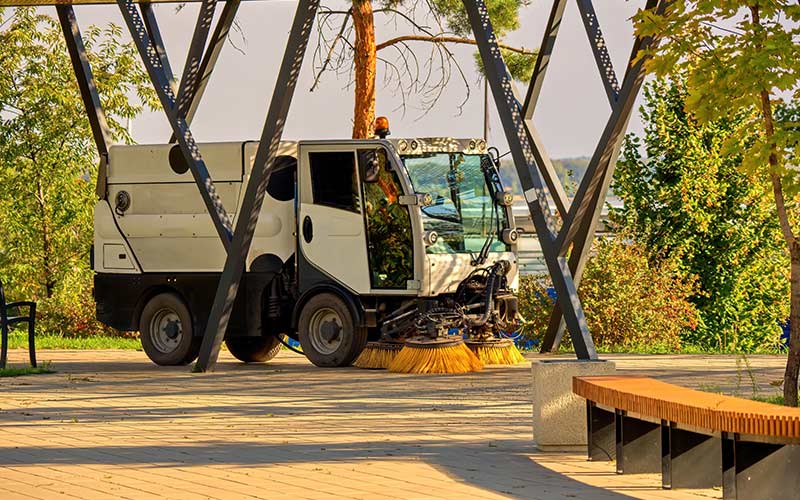
Road sweeping plays an important role in keeping commercial estates safe, functional and presentable. A planned road sweeping programme removes leaves, litter, grit and other debris before they obstruct drainage, create hazards or affect the appearance of external areas.
However, every site has different requirements. A busy logistics estate may need frequent commercial sweeping because vehicle movements continually bring dirt and debris onto roads and service yards. An office park with lighter traffic may need fewer visits but require additional leaf clearance during autumn.
Rather than applying the same schedule to every property, facilities and estate managers should consider how quickly debris builds up, where it collects and what risks it creates.
What Road Sweeping Prevents
Regular road cleaning does more than improve appearance. It helps facilities teams manage several practical estate risks.
Drainage problems: Leaves, litter, silt and other loose material can collect around gullies and drainage channels. Removing this debris from surrounding surfaces helps reduce the amount that reaches the drainage system.
Slip and surface hazards: Wet leaves, loose gravel, mud and other debris can affect roads, car parks and pedestrian routes. Planned sweeping helps keep these areas clear.
Poor site presentation: Car parks, access roads and service yards often form part of a visitor’s first impression. Regular surface cleaning helps maintain the standards that tenants, employees, customers and visitors expect.
Surface deterioration: Dirt, organic material and debris can collect against kerbs, around drainage points and in damaged areas. Regular cleaning gives facilities teams greater visibility of surface condition and can make defects easier to identify.
A planned sweeping programme therefore supports wider estate maintenance rather than simply addressing appearance.
Which Sites Need Planned Road Sweeping?
Most commercial estates can benefit from planned sweeping, but some environments require more frequent attention.
These include:
- Logistics and distribution sites, where HGVs and other vehicles can bring mud, grit and debris onto roads and yards.
- Retail parks, where high vehicle and pedestrian volumes create regular litter and presentation demands.
- Industrial and manufacturing sites, where operational activity can generate additional surface debris.
- Business parks and office estates, particularly those with landscaped areas, mature trees and large car parks.
- Healthcare and public sector estates, where facilities teams need to maintain safe access and consistent standards.
- Multi-occupancy estates, where facilities managers must maintain common roads, car parks and shared external areas.
The size of an estate alone should not determine the road sweeping schedule. Traffic levels, surrounding vegetation, drainage arrangements, operational activity and site standards all influence how often teams should carry out the work.
How Often Should Road Sweeping Take Place?
No single frequency works for every commercial estate.
Facilities teams should set a baseline schedule and then adjust it according to site conditions, seasonal pressures and operational demands.
| Site condition | Sweeping approach |
| Low traffic and limited debris | Carry out periodic planned sweeping and use inspections to review frequency |
| Moderate traffic with landscaped areas | Schedule regular sweeping and adjust visits as conditions change |
| High-traffic retail or logistics estate | Increase planned sweeping around priority roads, yards and car parks |
| Heavy seasonal leaf fall | Increase sweeping and leaf clearance during autumn |
| Nearby construction or earthworks | Temporarily increase sweeping where vehicles transfer dirt or debris |
| Sudden mud or debris accumulation | Arrange reactive sweeping |
| Recurring drainage concerns | Review road sweeping alongside drainage maintenance |
Autumn
Autumn often creates the greatest demand for road cleaning. Trees can deposit large quantities of leaves across roads, car parks and pedestrian areas within a short period.
If leaves accumulate, vehicles can break them down into wet organic material and move them towards gullies and drainage channels. Increasing the frequency of mechanical sweeping and leaf clearance during periods of heavy leaf fall can help control this build-up.
Winter
Winter brings different pressures. Wind, rain and storms can move leaves, litter and loose debris across an estate. Facilities teams should monitor priority areas and arrange additional sweeping when conditions create significant build-up.
Teams should also consider how sweeping fits alongside the wider winter maintenance programme so that each activity supports safe access across the site.
Spring
Spring provides a useful opportunity to remove debris that has accumulated during winter. Road sweeping can clear residual grit, organic material and general dirt from roads, yards and car parks.
Facilities teams can also use this period to inspect external areas and identify drainage or surface maintenance issues.
Summer
Many sites experience lower levels of leaf debris during summer, but road sweeping may still play an important role. Dry weather can increase dust, while landscaping, construction activity and heavy traffic can continue to create debris.
Retail, logistics and high-profile corporate sites may also maintain regular commercial sweeping schedules throughout summer to support presentation and operational standards.
Drainage and Leaf Clearance
Facilities teams should not treat road sweeping, leaf clearance and drainage maintenance as completely separate activities.
Leaves and surface debris often move towards gullies and drainage channels, particularly during heavy rainfall. A road sweeper can remove loose material from surrounding surfaces before it enters these systems, while targeted leaf clearance can tackle areas where vegetation creates concentrated build-up.
A coordinated approach might include:
Leaf clearance → surface sweeping → drainage inspection or maintenance
This sequence allows teams to address the source of debris as well as the areas where it can cause problems.
OUTCO includes road sweeping within its specialist cleaning services to help maintain cleanliness and prevent debris from contributing to drain blockages. Its wider estate maintenance services also include drain maintenance and drain surveys, allowing facilities teams to coordinate related requirements across the site.

What Should a Road Sweeping Scope Include?
A clear scope helps facilities teams and contractors understand exactly what the service needs to cover.
Areas to include
- Estate roads
- Car parks
- Service yards
- Loading areas
- Access routes
- Kerb lines
- Areas around gullies and drainage channels
- Other agreed hard surfaces
Service requirements
- Planned visit frequency
- Seasonal changes to the schedule
- Priority areas
- Reactive call-out arrangements
- Waste collection and removal
- Site access requirements
- Service reporting
- Photographic evidence where required
Debris to address
- Leaves
- Litter
- Grit
- Loose dirt
- Mud
- Small surface debris
- Organic material
Take a Co-ordinated Approach to External Estate Maintenance
Road sweeping works most effectively when facilities teams integrate it with the wider maintenance of roads, car parks, drainage and landscaped areas.
OUTCO provides specialist cleaning, including road sweeping, alongside grounds maintenance, drainage services, surface repairs and other planned and reactive external maintenance services. This approach gives facilities teams the opportunity to coordinate related work rather than manage each external maintenance requirement in isolation.
The OUTCO Service Portal also gives clients visibility of completed works and supporting service information, helping estate teams manage activity across individual sites and larger portfolios.
If roads, car parks or service yards collect debris faster than your current programme can manage, review the road sweeping frequency. Matching the schedule to site activity, seasonal conditions and known risk areas can help you address problems before they lead to additional maintenance or reactive call-outs.