Effective winter maintenance services require an understanding of how people and vehicles move around a site, where hazards develop and which areas are critical to daily operations. From pedestrian crossings and delivery bays to steep ramps and shaded walkways, every site presents different challenges during freezing conditions.
For facilities and property managers, a site-specific approach to winter maintenance helps reduce accidents, maintain accessibility, minimise disruption and support duty of care responsibilities.
Map How Your Site Is Actually Used
A site plan provides a useful starting point for winter maintenance, but it does not always reflect how people use a property in practice.
Employees may take shortcuts across car parks, customers may follow informal routes to building entrances, and delivery drivers may use access points outside normal operating hours. These movements can create areas of increased risk that a standard gritting plan might overlook.
When developing a winter maintenance plan, consider:
- Main vehicle entrances and exits
- Pedestrian movement between parking areas and buildings
- Informal walking routes and shortcuts
- Staff entrances
- Delivery routes, loading bays and service yards
- Accessible parking spaces and associated walkways
- Emergency access routes and fire exits
Speaking with on-site teams, security personnel and building users can also help identify recurring issues that may not appear on existing site plans.
OUTCO conducts detailed site surveys at the start of each contract, helping clients establish winter service requirements that reflect the layout, risks and operational needs of each property.
Pedestrian Routes and Crossings
Pedestrians face particular risks during freezing conditions. Even a small patch of ice can cause a serious injury, especially in areas where people regularly move between vehicles and buildings.
Car park gritting should therefore consider the entire pedestrian journey, rather than focusing solely on vehicle routes and parking spaces.
Key pedestrian areas include:
- Footpaths and designated walkways
- Pedestrian crossings within car parks
- Building entrances and exit points.
- Steps, kerbs and dropped kerbs
- Accessible parking bays and access routes
- Bus stops and passenger drop-off areas
- Trolley bays and outdoor waiting areas
A treated car park offers limited protection if pedestrians encounter ice on the final few metres of their journey to a building entrance.
Professional gritting services help address these risks by incorporating pedestrian areas into the wider treatment plan. Facilities managers should also consider lighting, signage and the condition of walking surfaces to support safer movement during darker winter mornings and evenings.

Identify Gradients, Ramps and Shaded Areas
Not every part of a car park experiences the same conditions. The layout of a site, surrounding buildings and exposure to sunlight can all influence how quickly surfaces freeze and how long ice remains.
Sloping access roads and ramps present additional challenges because vehicles may struggle to maintain traction during icy conditions. Pedestrians also face an increased risk of slipping when walking on inclined surfaces.
Shaded surfaces can remain frozen long after other parts of a site have thawed. Similarly, water running down a slope can freeze at its base, creating a hazard in an otherwise clear area.
Effective winter maintenance services take these differences into account when establishing treatment areas, service requirements and appropriate activation temperatures.
OUTCO uses site-specific, professional weather forecasts and road surface temperature data to determine when conditions require treatment. This approach supports timely service activation without relying solely on general air temperature forecasts.
Protect Delivery Routes and Emergency Access
Winter maintenance plays an important role in keeping businesses operational. For logistics facilities, retail parks, healthcare estates and industrial sites, restricted vehicle access can have consequences far beyond the car park itself.
Ice and snow can delay deliveries, interrupt supply chains and prevent staff from accessing essential facilities.
Snow clearance planning should also identify suitable locations for displaced snow. Poorly positioned snow piles can obstruct visibility, block pedestrian routes, restrict vehicle movements or cover drainage points.
By agreeing these priorities in advance, facilities managers can reduce the need for last-minute decisions during severe weather.
OUTCO tailors its gritting and snow clearance services to individual site requirements, selecting equipment and treatment areas that reflect the size, layout and operational demands of each property.
Link Winter Safety to Drainage and Surface Condition
Gritting helps manage ice, but it does not address the underlying problems that allow ice to form repeatedly.
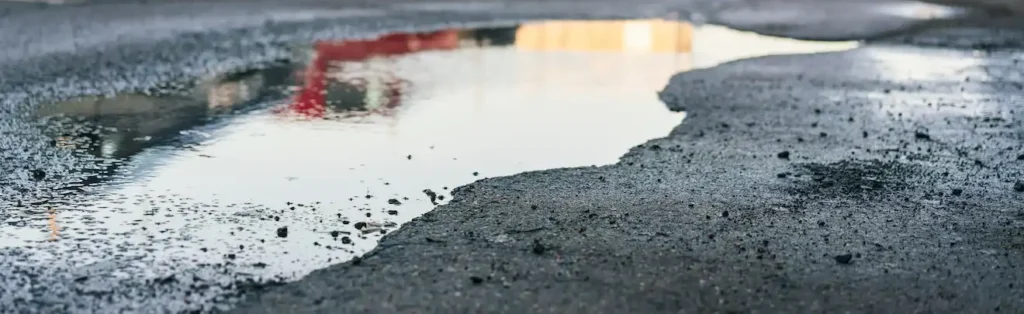
Blocked drains, damaged surfaces and poor drainage can cause water to collect across car parks and pedestrian areas. When temperatures fall, these areas can freeze and create recurring hazards.
Facilities managers should look for:
- Blocked drains and gullies
- Standing water and recurring puddles
- Potholes and damaged tarmac
- Cracked or uneven paving
- Water running across pedestrian routes
- Leaking downpipes and overflowing gutters
- Faded pedestrian crossings and road markings
Repeated freezing and thawing can also worsen existing surface damage. Water enters cracks, expands as it freezes and contributes to further deterioration.
Connecting commercial winter maintenance with year-round asset maintenance helps address both immediate hazards and their underlying causes.
Alongside winter services, OUTCO provides drain maintenance, drain surveys, surface repairs, line marking and external condition surveys. Clients can address recurring hazards through a single maintenance partner, reducing the time spent coordinating multiple contractors and arranging separate site visits.
Establish Clear Winter Maintenance Priorities
A structured approach to winter risk management helps facilities managers direct resources towards the areas where snow and ice could have the greatest impact.
The following framework provides a starting point for assessing winter maintenance priorities.
| Priority | Site areas | Main objective |
|---|---|---|
| Critical | Emergency access routes, fire exits and essential operational areas | Protect emergency access and business continuity |
| High | Pedestrian crossings, entrances, ramps and accessible parking routes | Reduce accident risks and maintain accessibility |
| Operational | Delivery bays, service yards and main vehicle routes | Minimise disruption to daily operations |
| General | Remaining parking areas and lower-traffic routes | Maintain wider site safety and usability |
Every site will have different priorities. Facilities managers should use their site risk assessment to determine the appropriate level of treatment for each area.
How OUTCO Makes Winter Maintenance Easier
Managing winter safety across a single property can place considerable demands on facilities teams. Across a national property portfolio, coordinating service visits, monitoring forecasts and maintaining service records becomes even more time-consuming.
OUTCO’s fully managed winter maintenance services bring these responsibilities together through one service provider.
With over 20 years of winter maintenance experience, nationwide coverage and more than 250,000 winter gritting jobs managed annually, OUTCO combines operational capacity with local knowledge and site-specific planning.
Our approach includes:
- Detailed site surveys: Establish treatment areas and service requirements that reflect how each property operates.
- Professional weather forecasting: Use site-specific road surface temperature forecasts to support precise service activation.
- Automated service scheduling: Reduce the need for clients to monitor forecasts and manually arrange routine visits.
- Gritting and snow clearance: Protect agreed pedestrian areas, car parks and operational access routes.
- Service verification: Provide photographic evidence, GPS tracking and downloadable service reports.
- 24/7 winter support: Give clients access to a dedicated helpdesk when they need assistance or additional services.
- Integrated outdoor maintenance: Address drainage, surface defects and other external hazards through one provider.
Through the OUTCO Service Portal, clients can view scheduled and completed visits, access service records, request additional treatments and manage activity across multiple properties.
This provides a clear audit trail to support duty of care responsibilities while reducing administrative workloads and giving facilities managers more time to focus on their wider responsibilities.
Winter Car Park Safety Starts with Site Planning
Effective snow and ice management starts with understanding a property’s layout, how people use it and which areas are essential to its operation.
By identifying pedestrian routes, gradients, shaded areas, drainage issues and critical access points, facilities managers can develop a winter maintenance strategy that addresses the specific risks of their estate.
Combining this planning with professional forecasting, proactive gritting, snow clearance and ongoing asset maintenance helps reduce risks, protect accessibility and maintain business continuity throughout the winter months.
Whether you manage a single commercial property or a nationwide portfolio, OUTCO’s winter maintenance services help you protect your outdoor estate while reducing the time and resources required to manage winter operations.
Speak to OUTCO today to discuss your site’s winter maintenance requirements and develop a service plan that reflects the needs of your property.
Contact our team on 0800 0432 911.