Summer is often viewed as a quieter season for facilities and property management teams. Yet warmer weather can create its own operational challenges, from increased grounds maintenance demands and asset deterioration to drainage issues, vegetation growth, and higher site usage. Organisations that rely solely on reactive maintenance instead of a data-led maintenance strategy frequently find themselves dealing with unexpected disruptions, unplanned costs, and avoidable downtime.
A data-led maintenance strategy enables organisations to move beyond firefighting day-to-day issues and take a more proactive approach to managing outdoor assets. By using maintenance data, condition reporting, and site visibility to inform decisions, facilities teams can identify risks earlier, prioritise resources more effectively, and reduce operational disruption throughout the summer months.

Why Reactive Maintenance Creates Summer Challenges
Reactive maintenance has traditionally been the default approach for many organisations. An issue occurs, a defect is reported, and a contractor is instructed to resolve it.
While this approach can seem cost-effective in the short term, it often creates several challenges:
- Higher emergency repair costs
- Increased disruption to site users
- Greater risk of asset deterioration
- Difficulty forecasting budgets
- Limited visibility of recurring issues
- Reduced operational efficiency
For facilities managers responsible for multiple locations, reactive maintenance can quickly become difficult to manage. A recurring pothole, blocked drainage system, damaged fencing, or overgrown vegetation may appear as isolated incidents, when in reality they indicate wider maintenance trends requiring strategic attention.
This is where a data-led maintenance strategy provides a significant advantage.
The Shift Towards Data-Led Decision Making
Modern facilities management increasingly relies on accurate information rather than assumptions. A data-led maintenance strategy uses information gathered from inspections, service records, condition surveys, work orders, and asset histories to support informed maintenance planning.
Instead of asking: “What has broken?”
Facilities teams can ask: “What is most likely to fail next, and how can we prevent it?”
This strategic shift allows organisations to move towards a proactive maintenance approach, where interventions are planned before disruption occurs.

__
Identifying Risks Before They Escalate
One of the biggest advantages of maintenance analytics is the ability to identify emerging issues early.
For example:
- Drainage inspections may reveal recurring blockages before flooding occurs.
- Surface surveys can identify deterioration before potholes develop.
- Tree inspections can highlight safety risks before storms cause damage.
- Grounds maintenance records can reveal areas where vegetation growth is becoming problematic.
Regular inspections and condition assessments provide valuable data that supports predictive maintenance planning, helping organisations prioritise investment where it will have the greatest impact.
Rather than allocating budgets based on assumptions, facilities teams can make evidence-based decisions that reduce long-term costs and operational disruption.
Improving Visibility Across Multiple Sites
Managing multiple locations presents a unique challenge. Without clear reporting and site visibility, maintenance decisions are often based on incomplete information.
Many organisations still rely on spreadsheets, emails, and disconnected systems to manage maintenance activity.
This can make it difficult to answer basic operational questions such as:
- Which sites are generating the highest maintenance costs?
- What recurring issues are occurring across the estate?
- Which assets require investment in the next 12 months?
- How are contractors performing against service expectations?
Centralised reporting and maintenance visibility and reporting tools provide a clearer picture of estate performance. This allows facilities managers to identify trends, compare site performance, and make more informed decisions about maintenance priorities. Enhanced visibility is particularly valuable for estate managers responsible for large property portfolios, where consistency and operational oversight are critical.

__
Supporting Better Budget Planning
Unexpected maintenance costs can place significant pressure on operational budgets.
A data-driven maintenance management approach helps organisations understand:
- Historical spending patterns
- Asset lifecycle trends
- Seasonal maintenance requirements
- Future replacement priorities
This insight allows maintenance budgets to be allocated more effectively and reduces the likelihood of unexpected expenditure during peak operational periods.
Rather than reacting to emergencies, facilities teams can develop a preventative maintenance strategy that balances immediate requirements with long-term asset performance.
The result is often a more predictable maintenance budget and improved return on investment.
Using Technology to Drive Smarter Maintenance
Technology has become an important enabler of proactive facilities management. Modern maintenance platforms provide access to service records, inspection reports, photographic evidence, and asset histories in a single location.
Digital reporting tools can help organisations:
- Track maintenance activity in real time
- Monitor asset performance
- Analyse maintenance trends
- Improve contractor accountability
- Support compliance requirements
The growing use of integrated technology platforms and digital reporting has helped facilities managers gain greater control over maintenance operations and reduce administrative burden through improved access to service information and reporting.
This type of intelligent asset maintenance supports faster decision-making and enables teams to respond more effectively when issues arise.
Read more: How Technology is Transforming Facilities Management
Summer Maintenance Areas That Benefit Most from Data
Several outdoor maintenance activities are particularly well suited to a data-led maintenance strategy during the summer months.
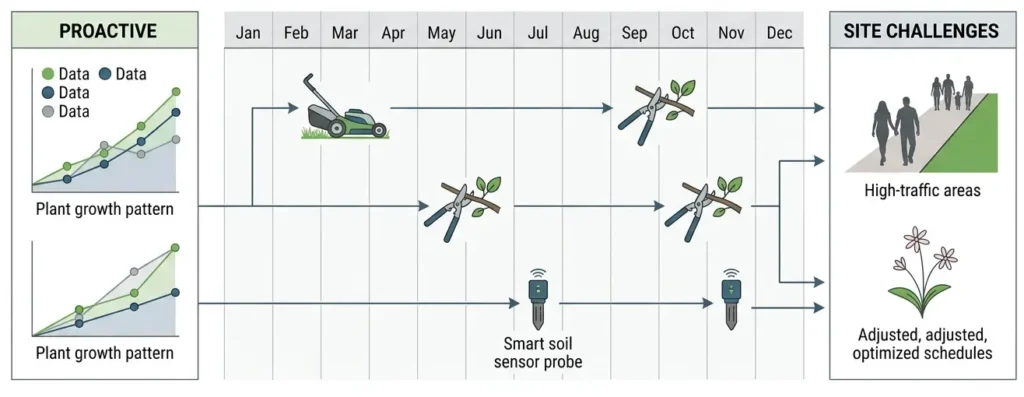
Grounds Maintenance
Tracking growth patterns, seasonal requirements, and site-specific challenges allows maintenance schedules to be adjusted proactively rather than reactively.
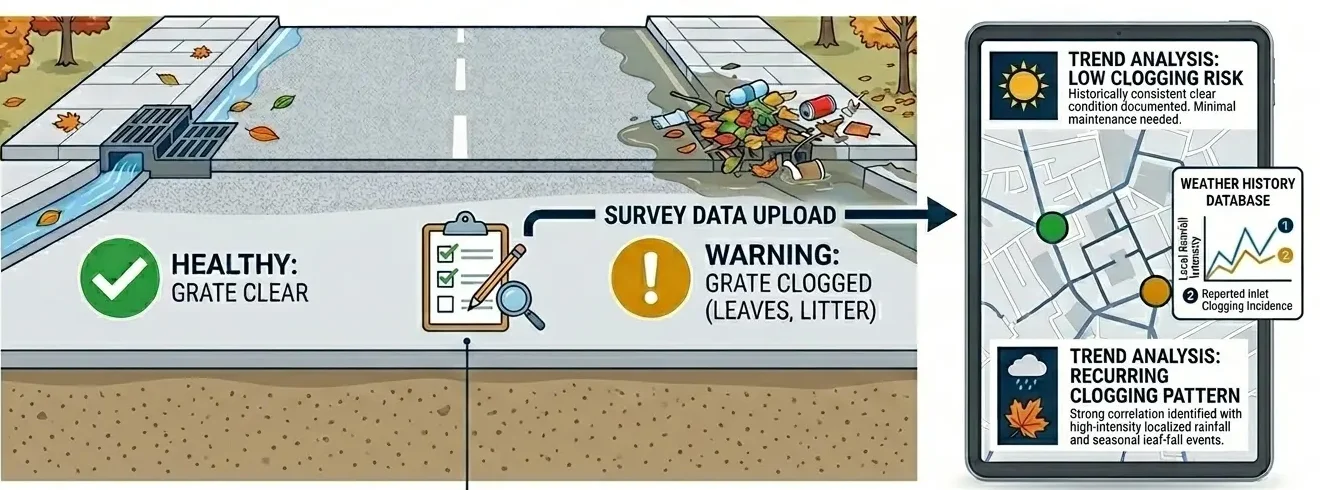
Drainage Management
Inspection data can identify areas prone to blockages or flooding before heavy summer rainfall causes operational disruption.
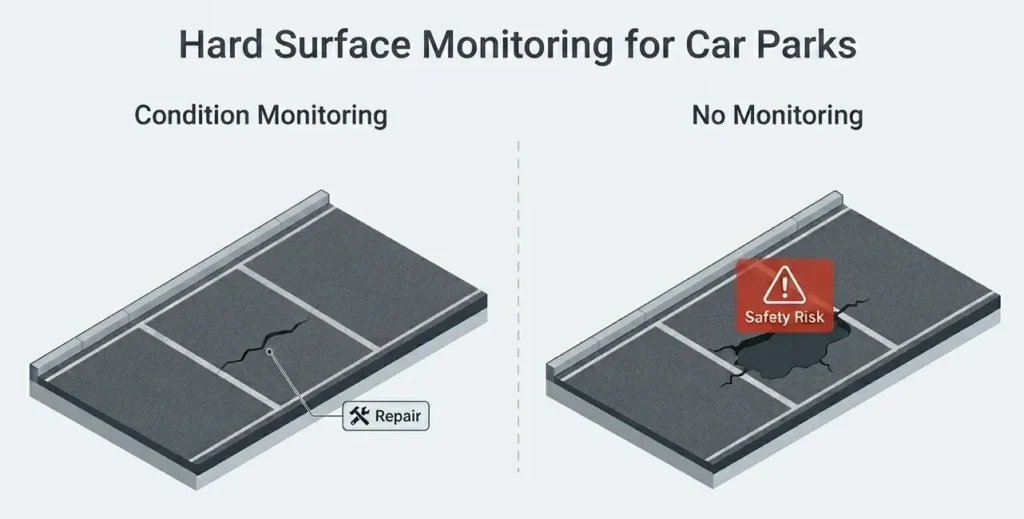
Hard Surface Maintenance
Condition monitoring helps prioritise repairs to roads, footpaths, and car parks before defects become safety risks.
__
Building a More Resilient Estate
The most effective maintenance strategies combine operational expertise with reliable data.
Facilities managers are increasingly expected to optimise budgets, improve service delivery, maintain compliance, and reduce risk across complex estates. These priorities are particularly important for multi-site organisations seeking consistency, visibility, and operational efficiency.
By adopting a data-led maintenance strategy, organisations can move away from reactive decision-making and towards a more structured, evidence-based approach.
Organisations experience fewer disruptions, improve asset performance, gain more predictable costs, and make better decisions about where to invest maintenance resources for maximum value.
As outdoor estates become more complex and operational expectations continue to increase, proactive maintenance supported by data will play an increasingly important role in keeping sites safe, functional, and resilient throughout the summer and beyond.