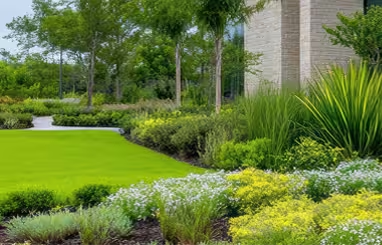
Summer is often viewed as the season when outdoor spaces simply need to look their best. Lawns are cut, hedges are trimmed, and flowerbeds are maintained to create a positive first impression.
However, Summer Grounds Maintenance Safety is about far more than appearance. For facilities managers, property managers and estate teams, summer presents a critical opportunity to reduce risks, protect outdoor assets, and prevent small issues from becoming costly operational problems.
The reality is that outdoor facilities management is fundamentally different from managing internal environments. Buildings operate within relatively controlled conditions. Outdoor estates do not. They are shaped by weather patterns, temperature fluctuations, rainfall levels, sunlight hours, and biological growth cycles that are becoming increasingly unpredictable.
As climate patterns continue to change, facilities managers must rethink how they approach preventative grounds maintenance and place greater trust in specialist providers who understand the impact of external conditions on their estates.
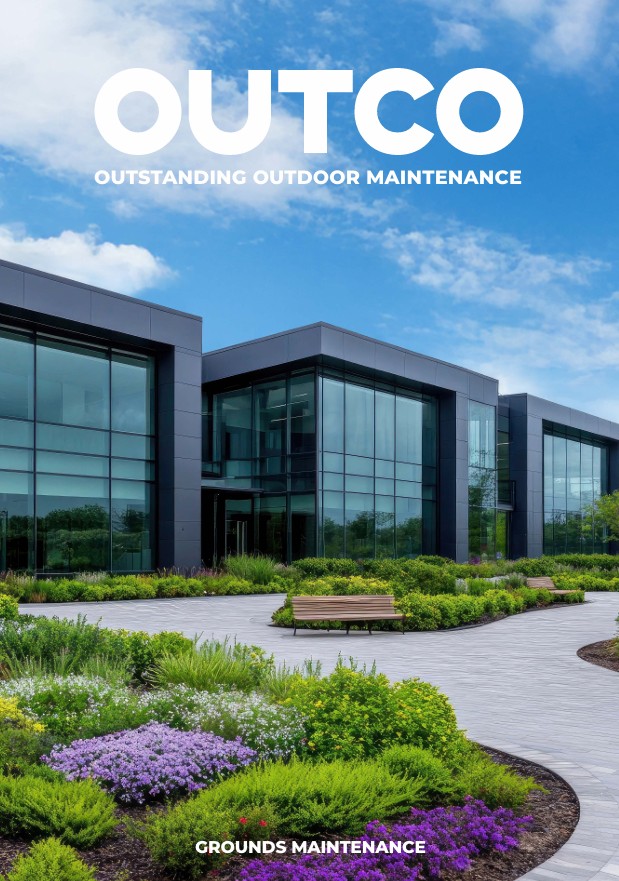
Outdoor Facilities Management Is Driven by the Environment
Unlike many areas of facilities management, outdoor maintenance cannot operate effectively on a fixed checklist alone.
Every outdoor asset is influenced by environmental conditions. Grass growth, weed emergence, tree development, moss accumulation, drainage performance and hard surface deterioration are all affected by changes in temperature and rainfall.
A maintenance schedule may specify grass cutting and hedge trimming for a particular visit. However, what happens if several weeks of warm temperatures and intermittent rainfall have triggered rapid weed growth across pedestrian walkways and car parks?
The condition of the site has changed.
A rigid approach focused solely on completing predetermined tasks may miss emerging issues that could affect outdoor estate safety and compliance. Effective commercial grounds maintenance requires site-specific assessment and professional judgement at every visit.
This is why the most effective maintenance providers act as an extension of the facilities management team, identifying risks and adapting maintenance activities to the conditions they encounter on site.

The Shift from Four Seasons to Two
Many facilities managers are already noticing that traditional seasonal patterns no longer seem to apply.
Spring and autumn are becoming increasingly compressed, while prolonged periods of hotter weather and wetter weather dominate the year. Rather than four distinct seasons, many outdoor maintenance professionals are effectively planning for two extended operating conditions:
- Growth season
- Weather resilience season
The transition periods that once allowed vegetation growth to accelerate gradually are shrinking. Instead, sites can move rapidly from dormant winter conditions into intense growth cycles.
This creates significant challenges for seasonal grounds maintenance programmes.
Grass can grow substantially faster than anticipated. Weeds can establish themselves more aggressively. Trees and shrubs may require earlier intervention. Drainage systems can become overwhelmed by sudden heavy rainfall following dry periods.
For facilities managers, this means maintenance programmes must become more responsive and less reliant on traditional seasonal assumptions.
Growth Creates Safety Risks, Not Just Appearance Issues
When people think about grounds maintenance, they often think about presentation.
Yet many of the most important outcomes relate directly to safety.
Unchecked vegetation can:
- Obstruct visibility at vehicle junctions
- Create trip hazards on pathways
- Restrict access routes
- Conceal surface defects
- Block drainage systems
- Increase slip risks through moss and organic debris
- Compromise site security by reducing sightlines
These issues often develop gradually. By the time they become visible to site users, the underlying problem may already require more extensive intervention.
This is why grounds maintenance safety should be viewed as a preventative function rather than an aesthetic one.
Much like servicing a vehicle before it breaks down, effective maintenance prevents deterioration before it impacts operations.
Why Facilities Managers Should Trust Their Maintenance Provider
One of the biggest challenges in facilities management outdoor maintenance is balancing specification with flexibility.
Service schedules are essential. They provide structure, budgeting certainty and accountability.
However, outdoor environments rarely follow a schedule.
A maintenance operative may arrive on site with instructions to mow grass and trim hedges. On paper, those tasks may be entirely appropriate.
In reality, recent weather conditions may have created more pressing priorities.
A period of warm temperatures followed by rainfall could have accelerated weed growth around entrances and pedestrian routes. Surface moss may be developing in shaded areas. Vegetation may be encroaching onto access roads or obscuring signage.
The most effective maintenance providers understand that successful outcomes are achieved by responding to site conditions rather than simply completing a predefined list of tasks.
This requires expertise, local knowledge and the confidence to make informed recommendations that protect the estate.
Facilities managers should expect their provider to act as the eyes and ears of the site, identifying developing issues and recommending the right course of action before problems escalate. This proactive approach aligns with OUTCO’s commitment to making clients’ lives easier through expert outdoor maintenance and preventative asset care.
Preventative Maintenance Protects Outdoor Assets
Grounds are only one part of the outdoor environment.
Summer conditions also affect a wide range of external assets including:
- Hard surfaces
- Drainage infrastructure
- Fencing
- Trees
- Access routes
- Car parks
- Perimeter areas
Many of these assets experience increased stress during periods of prolonged heat, sudden rainfall, or accelerated vegetation growth.
A proactive outdoor asset maintenance strategy identifies risks before they become expensive reactive works.
For example, controlling vegetation around drainage systems can prevent blockages before heavy rainfall events occur. Managing tree growth can reduce future safety risks. Early weed control can prevent damage to hard surfaces and reduce long-term maintenance costs.
The objective is not simply to maintain appearance, but to extend asset life, support compliance, and minimise operational disruption. This preventative approach is central to effective estate management and helps reduce the need for costly reactive interventions.
A Smarter Approach to Summer Grounds Maintenance
The future of grounds maintenance strategy will increasingly rely on expertise, environmental awareness, and data-led decision making.
As weather patterns continue to evolve, facilities managers need partners who understand how external conditions influence every aspect of the outdoor estate.
Successful summer maintenance programmes should be:
- Responsive to changing weather conditions
- Focused on risk reduction
- Aligned with asset protection goals
- Flexible enough to address emerging issues
- Supported by professional site assessments
Most importantly, they should move beyond appearance alone.
The best outdoor estates do not simply look well maintained. They are safer, more resilient, and better prepared for changing environmental conditions.
Summer Grounds Maintenance Safety is ultimately about protecting people, assets and operations. As traditional seasonal patterns continue to shift and growth cycles become less predictable, facilities managers need a proactive approach that responds to conditions on the ground rather than relying solely on fixed schedules.
By trusting experienced outdoor maintenance specialists to assess site conditions and adapt accordingly, organisations can reduce risk, improve asset performance, and maintain safe, compliant environments throughout the summer and beyond.