
For commercial properties, vegetation clearance is far more than cutting back overgrown plants. Left unmanaged, vegetation can obstruct access routes, reduce visibility, damage infrastructure, compromise security and increase maintenance costs. Whether you manage a retail park, logistics hub, industrial estate, healthcare facility or office complex, proactive vegetation management helps keep your site safe, compliant and fully operational.
Rather than treating clearance as a cosmetic task, it should form part of a wider estate maintenance strategy. By addressing overgrowth before it creates operational issues, facilities and property managers can reduce risk, improve site usability and protect valuable assets. OUTCO provides planned and reactive vegetation clearance as part of a wider grounds maintenance service, helping clients maintain safe, functional commercial environments nationwide.
1. When Vegetation Becomes an Operational Risk
Vegetation naturally grows into any available space. Without routine management, shrubs, trees, weeds and self-seeded growth can begin affecting how a site operates rather than simply how it looks.
Overgrown vegetation can narrow vehicle routes, obstruct pedestrian walkways, hide hazards and restrict access for maintenance teams. It may also accelerate deterioration by trapping moisture against surfaces, encouraging moss growth and allowing roots to damage paving or underground infrastructure.
Many commercial sites only recognise the problem once complaints are received or reactive work becomes necessary. A planned vegetation management programme identifies potential issues early, allowing clearance work to be completed before disruption occurs.
For facilities managers responsible for multiple locations, proactive site clearance also creates consistency across an estate, helping maintain compliance and reducing emergency call-outs.
2. Access Roads, Paths and Emergency Routes
Maintaining clear access is one of the most important reasons for regular vegetation clearance.
Routine clearance helps to:
- Keep pedestrian footpaths free from encroaching shrubs and weeds
- Maintain safe vehicle access roads throughout the year
- Ensure emergency vehicles can reach all parts of the site without obstruction
- Prevent vegetation reducing the usable width of service roads and loading areas
- Improve accessibility for visitors, staff and contractors
- Reduce trip hazards created by root growth or overgrown planting
- Maintain clear access to fire exits, assembly points and emergency escape routes
By keeping circulation routes unobstructed, businesses reduce operational disruption while supporting health and safety responsibilities.
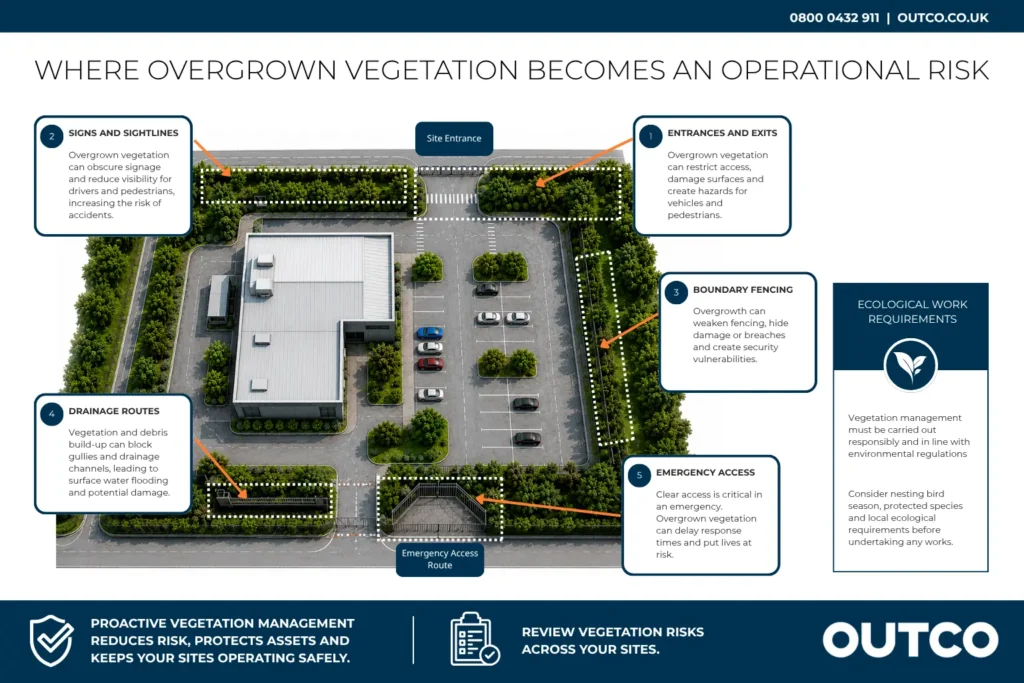
3. Visibility at Junctions and Entrances
Good visibility is fundamental to site safety. Commercial entrances, internal road junctions and car parks all rely on clear sightlines for both drivers and pedestrians.
Overgrown hedges, dense planting and unmanaged trees can restrict visibility, increasing the likelihood of vehicle collisions or near misses. Delivery drivers entering unfamiliar sites are particularly vulnerable when vegetation obscures directional signage, barriers or approaching traffic.
Vegetation clearance also improves the effectiveness of CCTV, lighting and security cameras by removing visual obstructions. Combined with regular tree management and hedge maintenance, sites remain safer throughout every season.
Improving visibility directly supports safer vehicle movements, smoother traffic flow and reduced risk across busy commercial estates.
4. Boundaries, Fencing and Security
Boundary areas often receive less attention than central landscaped spaces, yet they play a significant role in protecting commercial property.
Dense vegetation growing against fencing can hide damage, provide opportunities for climbing or make inspections difficult. Trees and shrubs may also place pressure on fence lines, reducing their lifespan and increasing maintenance costs.
Professional site clearance helps maintain secure perimeters by:
- Keeping fencing visible for routine inspections
- Removing vegetation that creates hiding places or unauthorised access routes
- Protecting fencing from damage caused by branches and root growth
- Improving CCTV visibility along site boundaries
- Making boundary repairs quicker and easier to complete
- Supporting wider site security and access control measures
When vegetation management is coordinated alongside fencing maintenance, organisations gain greater confidence that perimeter security remains effective throughout the year.

5. Drainage, Utilities and Hidden Assets
Many of a site’s most important assets are hidden beneath or behind vegetation.
Drainage channels, inspection chambers, utility covers, attenuation systems and service ducts can quickly become concealed by weeds and overgrowth. When these assets cannot be accessed easily, routine inspections become more difficult and maintenance costs often increase.
Roots can also interfere with drainage infrastructure, while accumulated vegetation traps leaves and debris that contribute to blocked drains and standing water.
Regular land clearance allows maintenance teams to identify developing issues before they become expensive repairs. It also improves access for survey work, inspections and reactive maintenance, helping organisations protect the long-term condition of their outdoor assets.
6. Wildlife and Seasonal Constraints
Vegetation clearance should always be carefully planned to balance operational needs with environmental responsibilities.
Key considerations include:
- Scheduling major clearance outside bird nesting season wherever possible
- Identifying protected habitats before work begins
- Managing invasive plant species using appropriate control methods
- Retaining valuable habitat where operationally appropriate
- Supporting biodiversity alongside safe estate management
- Planning seasonal vegetation control to reduce disruption during peak site activity
Professional contractors understand how to deliver clearance responsibly while complying with relevant environmental legislation and best practice. OUTCO’s environmental management services integrate vegetation management with wider biodiversity objectives, helping clients balance operational performance with sustainable estate management.

7. Building a Clearance Scope
Every commercial site presents different challenges, making a one-size-fits-all approach ineffective. The most successful vegetation clearance programmes begin with a thorough assessment of how the site operates.
A well-defined scope should identify priority areas such as entrances, access roads, boundaries, drainage systems, loading bays and utility corridors. It should also consider seasonal growth patterns, site usage, wildlife constraints and long-term maintenance objectives.
Many organisations benefit from combining planned vegetation clearance with wider grounds maintenance, tree management, invasive weed control and reactive works under a single provider. This creates greater consistency, simplifies contractor management and helps ensure outdoor environments remain safe, compliant and operational throughout the year.
Ultimately, vegetation clearance is an investment in operational resilience rather than appearance. By proactively managing overgrowth, organisations protect their infrastructure, improve safety, strengthen security and create outdoor spaces that continue to support day-to-day business operations.